In a world full of screens and apps, a simple whiteboard might feel old school. Yet my best work almost always starts there. Standing in front of a blank board, marker in hand, makes ideas flow naturally. No distractions. No perfect pixels forcing early decisions. Just space to think, sketch, and get others involved.
The Power of Starting Without Screens
Starting a project without a screen is freeing. I can explore the problem before worrying about visual polish. Erasing and redrawing takes seconds. This speed encourages risk-taking and experimentation — exactly what early design needs. It also removes digital distractions, helping me stay in deep focus.
How Whiteboarding Shapes Better Ideas
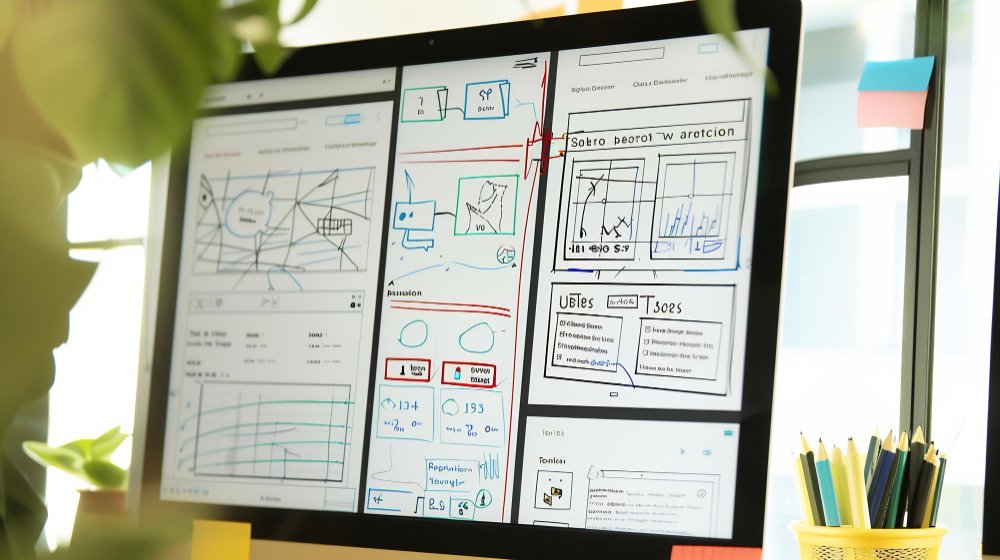
Whiteboarding is where rough ideas turn into usable concepts. If I cannot explain a flow in a few boxes and arrows, it is a sign that the design might be too complex. This step helps me simplify early, which saves time later. I often sketch two or three different approaches side by side and discuss them with the team before committing to one.
Bringing Teams Into the Conversation
This is where bullet points help highlight the impact:
- Engineers can suggest simplifications right on the spot.
- PMs can rearrange steps and check feasibility before tickets are written.
- Designers can explore options together instead of working in silos.
Whiteboarding turns collaboration into something visual and shared. Everyone sees the same picture and understands why decisions are made.
Turning Scribbles Into Action
A messy board is not the end — it is the beginning of a plan. I capture photos at the end of the session and turn the clearest parts into wireframes or flows. Because the team has already debated ideas, reviews move faster and everyone feels aligned.
Outcomes and Lessons Learned
When projects start on a whiteboard:
- We move faster because the direction is clear from day one.
- We catch complexity early and reduce rework later.
- Teams feel more ownership of the solution.
One lesson that stands out for me: whiteboarding made me comfortable with ambiguity. Early ideas are not supposed to be perfect — they are supposed to be explored.
Closing Thoughts
A whiteboard is more than a tool. It is where alignment starts and where trust is built. For me, design truly begins here — before the pixels, before the files, before the presentations. It begins with a marker, a blank surface, and a team ready to think together.