This initiative focused on introducing and scaling UX practices inside a large, engineering-driven enterprise environment.
The organization delivered complex products with strong engineering execution, but UX maturity was close to zero. Design was not part of early decision-making and was often treated as a delivery step.
The goal was to establish UX as a core capability without disrupting existing release commitments.
The Challenge
The existing workflow combined UX and UI within the same sprint.
This created multiple issues:
- Limited time for problem discovery and validation
- Design decisions made under delivery pressure
- Frequent rework during development
- Increased back-and-forth between teams
- Higher number of bugs due to unclear requirements
At the same time:
- Release timelines were already committed
- Processes were deeply embedded
- Change resistance was high due to enterprise scale
This meant we could not introduce a new process overnight.

What Process We Followed
Step 1: Start within the existing system
We did not force a process change. We aligned UX with the current sprint model and started introducing small improvements within it.
Step 2: Move UX one sprint ahead
The first shift was moving UX work slightly ahead of development.
- UX started preparing flows before engineering picked up tasks
- Reduced ambiguity during development
- Improved clarity in implementation
This was a small change but showed immediate impact.
Step 3: Expand to Program Increment (PI) level
Once initial trust was built, we extended UX planning to one PI ahead.
- UX started influencing roadmap discussions
- User problems were considered earlier
- Dependencies became clearer before development started
Step 4: Establish UX as a parallel track
After gradual adoption, UX was formalized as its own stream.
- UX begins at the idea stage
- Design thinking becomes part of product definition
- Engineering receives clearer, validated inputs
This marked a major shift from execution support to strategic input.
How We Enabled This Change
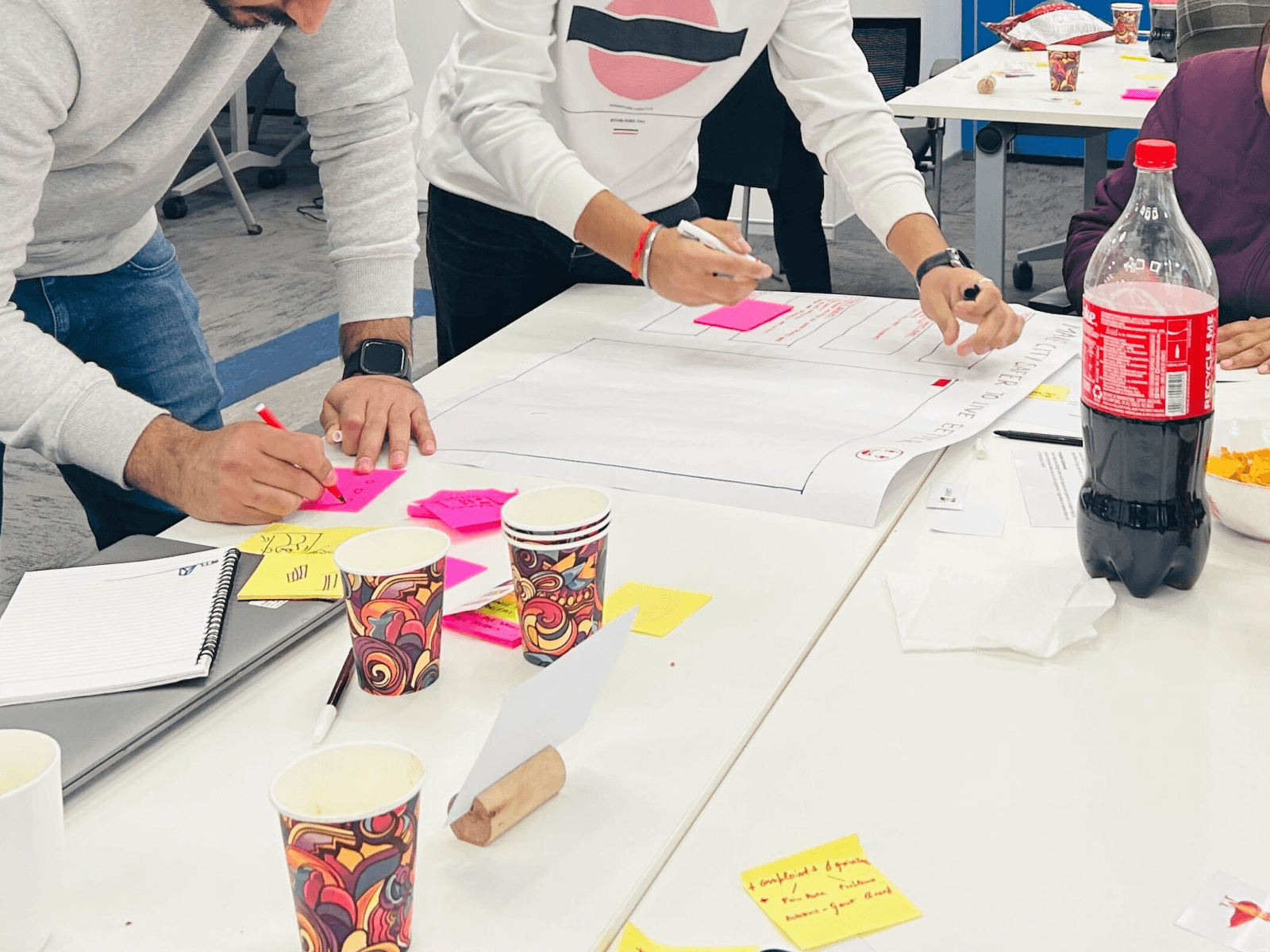
Cross-functional workshops
We conducted working sessions with:
- Engineering teams
- Product managers
- Leadership stakeholders
These sessions focused on real problems, not theory.
UX awareness through real-life examples
We ran awareness sessions using:
- Everyday UX problems from office environments
- Common usability issues from daily life
This made UX relatable and easy to understand.
Showing impact through real product issues
We used ongoing product work to demonstrate value:
- Highlighted bugs caused by unclear flows
- Showed rework due to late design decisions
- Compared before vs after scenarios
Demonstrating business value
For leadership, we focused on outcomes:
- Reduced development rework
- Fewer production issues
- Faster delivery due to clarity
- Improved customer feedback
Improving team efficiency
As UX moved earlier:
- Meetings reduced because decisions were clearer
- Engineering had fewer blockers
- Teams aligned faster on solutions

Key Decisions
Gradual change over forced adoption
We scaled UX step by step instead of introducing a new process at once.
Embed UX into existing rituals
UX became part of planning, discussions, and reviews rather than a separate activity.
Focus on visibility and clarity
We prioritized simple flows, early thinking, and clear communication over heavy documentation.
Prove value through outcomes
Adoption was driven by visible improvements, not mandates.
Impact
- UX moved from zero maturity to an integrated practice
- Design started influencing decisions at the idea stage
- Significant reduction in rework and confusion
- Improved collaboration across teams
- Faster and smoother delivery cycles
- Better product quality and user feedback
Key Takeaway
- UX maturity cannot be enforced in large organizations.
- It has to be introduced, proven, and then scaled.
- When UX becomes part of how teams think, not just what they deliver, real change happens.